


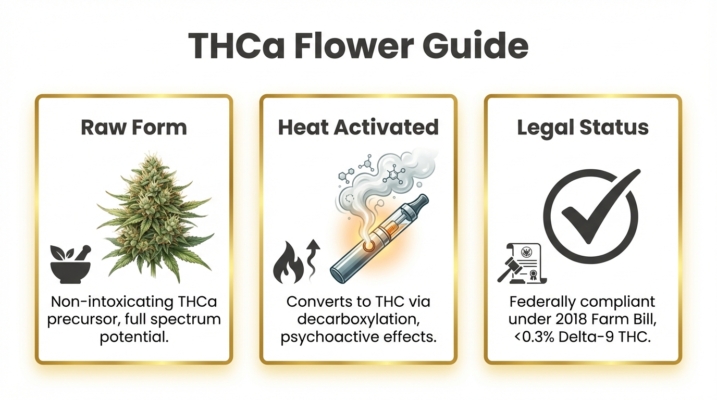
THCA

The Complete Guide to THCa Flower: Benefits, Where to Buy, and More
THCa flower is raw cannabis hemp that contains high concentrations of tetrahydrocannabinolic acid, a…
Learn more
You must be 21+ to enter this site
 FREE SHIPPING $89+
 FREE GIFT ON $120+
 100% FEDERALLY LEGAL
 LAB TESTED FOR PURITY
FREE SHIPPING $89+
FREE GIFT ON $120+
100% FEDERALLY LEGAL
LAB TESTED FOR PURITY
FREE SHIPPING $89+
FREE GIFT ON $120+
100% FEDERALLY LEGAL
LAB TESTED FOR PURITY
FREE SHIPPING $89+
FREE GIFT ON $120+
100% FEDERALLY LEGAL
LAB TESTED FOR PURITY
FREE SHIPPING $89+
FREE GIFT ON $120+
100% FEDERALLY LEGAL
LAB TESTED FOR PURITY
FREE SHIPPING $89+
FREE GIFT ON $120+
100% FEDERALLY LEGAL
LAB TESTED FOR PURITY
FREE SHIPPING $89+
FREE GIFT ON $120+
100% FEDERALLY LEGAL
LAB TESTED FOR PURITY
FREE SHIPPING $89+
FREE GIFT ON $120+
100% FEDERALLY LEGAL
LAB TESTED FOR PURITY
LAB TESTED FOR PURITY
FREE SHIPPING $89+
FREE GIFT ON $120+
100% FEDERALLY LEGAL
LAB TESTED FOR PURITY
FREE SHIPPING $89+
FREE GIFT ON $120+
100% FEDERALLY LEGAL
LAB TESTED FOR PURITY
FREE SHIPPING $89+
FREE GIFT ON $120+
100% FEDERALLY LEGAL
LAB TESTED FOR PURITY
FREE SHIPPING $89+
FREE GIFT ON $120+
100% FEDERALLY LEGAL
LAB TESTED FOR PURITY
FREE SHIPPING $89+
FREE GIFT ON $120+
100% FEDERALLY LEGAL
LAB TESTED FOR PURITY
FREE SHIPPING $89+
FREE GIFT ON $120+
100% FEDERALLY LEGAL
LAB TESTED FOR PURITY
FREE SHIPPING $89+
FREE GIFT ON $120+
100% FEDERALLY LEGAL
LAB TESTED FOR PURITY

The legal status of THCA is a topic of significant interest and debate in regards to cannabis regulation. As a precursor to THC, THC A holds potential therapeutic benefits without inducing the psychoactive effects commonly associated with its derivative.
THCa is it legal depends on several factors such as its source, how it is extracted, and the specific laws in each jurisdiction. Knowing the legal status of THCA is essential for individuals and businesses as they navigate the complicated rules and regulations related to cannabis.
Yes, THCA is legal in most jurisdictions where cannabis is legalized for medical or recreational use. However, its legal status may vary depending on specific regulations and the concentration of THCA in products.
In many places, THCA is considered legal as long as it is derived from hemp plants containing less than 0.3% THC on a dry weight basis. Additionally, the legal status of THCA may change over time as laws and regulations evolve, so it’s essential to stay informed about any updates in cannabis legislation.
THCA remains a controversial topic due to several factors that influence its legal status, therapeutic potential, and societal perceptions.
Firstly, its association with THC, the psychoactive compound derived from it upon decarboxylation, raises concerns about its potential intoxicating effects and regulatory oversight. Additionally, the legal landscape surrounding THCA is complex and varies significantly across jurisdictions, leading to ambiguity and confusion regarding its legality.
Furthermore, the lack of comprehensive research on THCA’s therapeutic effects and safety profile contributes to ongoing debates about its efficacy and potential risks. Societal attitudes towards cannabis and cannabinoids also influence the controversy surrounding THCA, with divergent perspectives shaping public discourse and policy decisions.
Overall, the multifaceted nature of THCA as a compound, coupled with regulatory, scientific, and societal factors, fuels ongoing controversies surrounding its use and regulation.
The legal status of THCA is closely tied to its relation to THC, the psychoactive component of cannabis. As THCA is the precursor to THC and found in hemp, its legality is often scrutinized by the DEA.
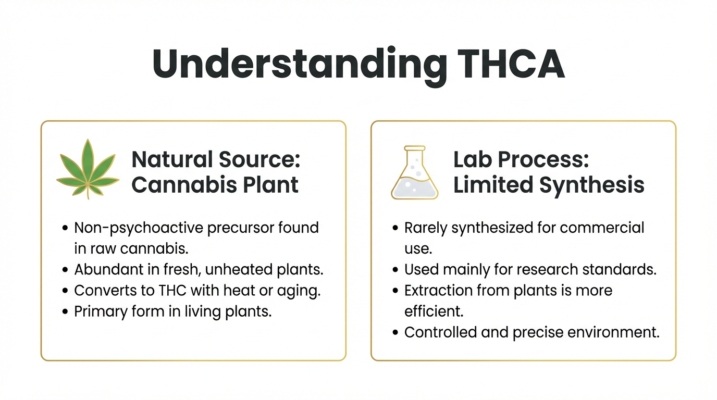
THCA, or tetrahydrocannabinolic acid, differs from THC in a significant way – it is non-psychoactive until heated or decarboxylated, converting it to the well-known psychoactive THC.
This crucial transformation is what blurs the lines of legality, as THCA itself is not regulated by the DEA.
THCA’s legality varies across different states due to the diverse legislative approaches and jurisdictional differences. While some states permit the use of THCA, others have stricter regulations in place.
For example, California is known for its progressive stance on THCA, allowing its possession and use for medicinal purposes under certain conditions. On the other hand, states like Texas have stringent laws that classify THCA as a controlled substance, making its possession and distribution illegal.
Understanding these state-specific regulations is crucial for individuals looking to navigate the cannabis industry compliantly and responsibly.
The laws surrounding THCA are influenced by key legislative acts such as the Agriculture Improvement Act of 2018, commonly known as the Farm Bill.
This act, signed into law in December 2018, played a pivotal role in distinguishing industrial hemp, including tetrahydrocannabinol acid (THCA), from marijuana. It legalized the cultivation and sale of hemp-derived products containing less than 0.3% THC, providing a significant boost to the hemp industry.
The Act sets guidelines for the production, marketing, and distribution of hemp products, ensuring compliance with federal standards. It opened up avenues for research and development within the hemp sector, promoting innovation and economic growth.
Regulating THCA involves oversight from various government agencies that impose restrictions on its production, sale, and consumption.
THCA is subject to regulation by government agencies like the USDA and FDA, which set standards for its cultivation, manufacturing, and distribution.
These agencies play a crucial role in ensuring that products containing THCA meet safety and quality requirements before they reach consumers. The USDA focuses on regulating the cultivation and farming practices related to THCA, whereas the FDA oversees the manufacturing processes and labeling of products containing this compound.
By enforcing strict guidelines and conducting regular inspections, these regulatory bodies help maintain the integrity of the THCA industry and protect public health.
Restrictions on THCA often revolve around its potential conversion to THC post-decarboxylation, raising concerns about psychoactive effects. Testing protocols are in place to monitor THC levels and ensure compliance.
One key aspect of these restrictions is the limitation placed on the permissible level of THC in products, typically set at a threshold value. This necessitates rigorous testing methodologies to accurately quantify the THC content.
Labs employ analytical techniques such as gas chromatography and high-performance liquid chromatography to assess THC levels, ensuring products meet regulatory standards. Regular audits and inspections are conducted to verify testing accuracy and adherence to protocols, safeguarding consumers from inadvertently consuming products with elevated THC content.
Using THCA offers a range of potential benefits for individuals seeking natural remedies and alternative therapies. Here are some of the key advantages associated with THCA consumption:
Using THCA carries certain risks, including the potential for triggering positive drug tests due to its association with controlled substances. Understanding the risks and side effects is crucial for informed consumption.
THCA has the potential to cause a positive result in drug tests, primarily due to its association with THC post-decarboxylation. This risk raises concerns about compliance with the Controlled Substances Act.
While THCA itself is not known to cause psychoactive effects, its potential to morph into THC raises red flags during drug screenings. Factors such as the sensitivity of the test and individual metabolism can influence the likelihood of a positive result.
THCA consumption may be associated with certain side effects linked to its cannabinoid properties, influencing factors such as perception and well-being.
Some studies suggest that THCA may have anti-inflammatory and neuroprotective properties, potentially benefiting users with conditions such as arthritis and epilepsy.
Excessive consumption of THCA may lead to adverse effects such as dizziness, nausea, and impaired coordination.
Combining THCA with other substances raises potential risks and interactions that may impact health outcomes.
One of the key considerations when combining THCA with other substances is the potential for drug interactions that can alter the effects of either or both substances. These interactions can range from mitigating the intended benefits to exacerbating side effects and creating unforeseen health risks.
Certain substances may enhance or inhibit the metabolism of THCA, affecting its duration and intensity in the body, leading to unpredictable consequences. Individuals with underlying health conditions or taking medications should particularly exercise caution when exploring combinations involving THCA.
THCA is available in various forms, including concentrates, derivatives, and raw buds. Each form offers unique characteristics and applications for consumers.
Concentrates, such as shatter and wax, are highly potent forms of THCA that are popular among seasoned users due to their strong effects.
On the other hand, derivatives like tinctures and capsules provide a more convenient and measured way to consume THCA.
Raw buds, found in the plant itself, offer a more natural and holistic experience, retaining the plant’s original compounds and flavors.
The distinction between THCA and THC lies in their chemical composition and properties as related compounds.
THCA is the raw, unheated form of THC found in the cannabis plant. On the other hand, THC, or tetrahydrocannabinol, is the psychoactive compound that results from heating or decarboxylating THCA.
Their isomeric relationship is notable, with THCA existing in its acidic form and THC as the neutral form that exhibits psychoactive properties upon activation. The molecular structure of THCA contains a carboxylic acid group, while THC lacks this group, affecting their binding capacity and interaction with the endocannabinoid system.
The recommended dosage for THCA can vary widely, but a common starting point is around 2.5 to 10 milligrams per day for beginners. However, individuals should always start with the lowest effective dose and gradually increase until the desired effects are achieved.
Factors such as body weight, metabolism, and overall health should also be taken into account to ensure safety and effectiveness. It is also recommended to consult with a healthcare professional or a knowledgeable cannabis specialist to tailor the dosage according to specific needs and conditions.
Safety precautions must be observed to prevent any adverse effects and promote a positive experience with THCA consumption.
Related Post:
THCA’s legal status is subject to various factors, including its source, extraction method, and jurisdictional regulations. While THCA itself is generally legal in most states where cannabis is legalized, its legality may vary depending on specific laws and the concentration of THC in products.
Understanding the legal landscape surrounding THCA is essential for individuals and businesses navigating the complexities of cannabis laws and regulations.
THCA, or tetrahydrocannabinolic acid, is a naturally occurring compound found in the cannabis plant. It is the precursor to THC, the psychoactive compound responsible for the “high” sensation.
No, THCA is not psychoactive on its own. It only becomes psychoactive when heated and converted into THC. This is why consuming raw cannabis, which contains THCA, does not produce a “high” effect.
No, THCA is not considered a controlled substance. However, it is important to check your local laws and regulations regarding the possession and use of THCA products.
Yes, you can purchase THCA products online. However, it is important to ensure that the product is legal in your state before making a purchase.
THCa flower is raw cannabis hemp that contains high concentrations of tetrahydrocannabinolic acid, a…
Learn more
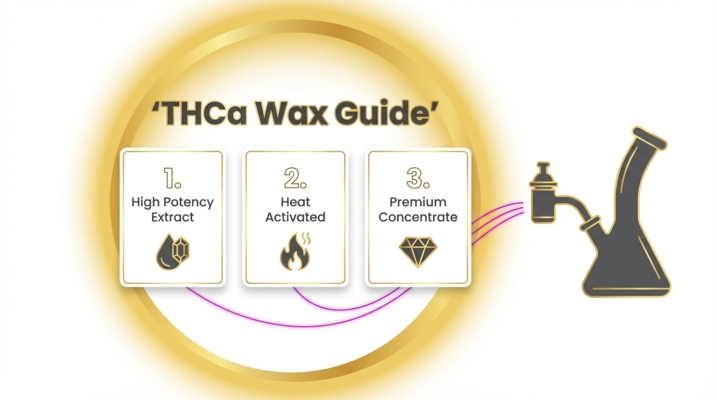
THCa wax is a cannabis concentrate containing high levels of tetrahydrocannabinolic acid in a…
Learn more
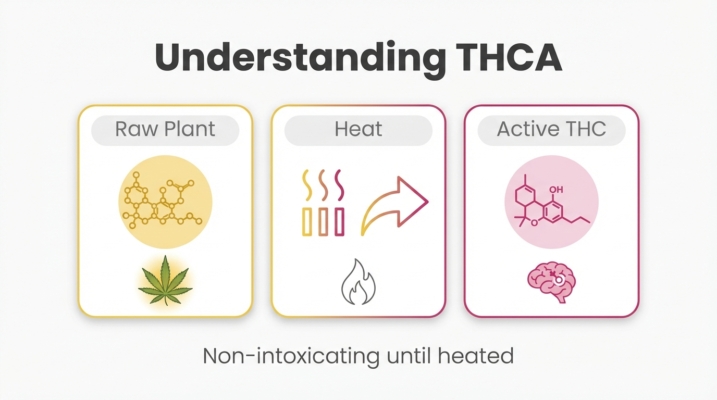
THCA (tetrahydrocannabinolic acid) is a non-intoxicating cannabinoid found naturally in raw cannabis and hemp…
Learn more
THCA (tetrahydrocannabinolic acid) is a naturally occurring cannabinoid produced by Cannabis sativa plants through…
Learn more





